

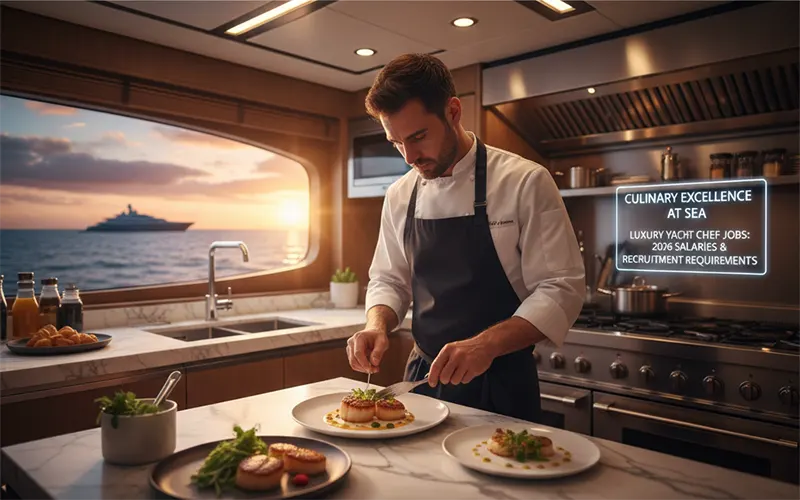
The superyacht industry in 2026 has reached a new peak of culinary ambition. On the world’s most elite vessels, the chef is no longer just a crew member; they are the heart of the guest experience. For the right professional, the “galley life” offers a unique financial and creative proposition: the ability to cook with the world’s finest ingredients with zero overhead, all while earning a tax-free salary that rivals executive roles on land.
However, the transition from a Michelin-starred restaurant to a 60-meter superyacht is not merely a change of scenery. It is a transition into a high-stakes maritime environment where culinary mastery must be balanced with rigorous safety certifications and the logistical agility of a supply chain manager.
The Allure and Reality of the Galley
The financial appeal of yachting is undeniable. In 2026, a yacht chef’s salary is almost entirely “disposable income.” With your housing, high-end uniforms, healthcare, and even toiletries provided by the owner, the ability to save is unmatched.
Yet, the “glamour” of the Mediterranean sunset is often viewed through a small galley porthole. You are frequently the first to wake and the last to sleep, preparing three-course meals for guests while simultaneously ensuring the 15+ crew members are well-fed and energized. You must be able to plate a perfect crudo while the vessel is pitching in a three-meter swell—a feat colloquially known as “cooking in a blender.”
2026 Salary & Compensation Breakdown
As of early 2026, salary scales have shifted upward to reflect the increasing size of new builds and the demand for specialized dietary expertise.
| Vessel Size | Role | 2026 Monthly Salary (USD/EUR) |
| 30m – 40m | Sole Chef | $5,000 – $7,500 |
| 40m – 60m | Head Chef | $8,500 – $11,500 |
| 60m – 80m | Executive Head Chef | $11,500 – $14,000 |
| 100m+ | Executive Chef | $16,000 – $22,000+ |
| All Sizes | Sous Chef | $5,500 – $8,500 |
The Charter Bonus: If you work on a “Charter” yacht (rented by guests), you are eligible for tips. In 2026, the industry standard for a week-long charter tip is 10% to 15% of the charter fee, split among the crew. For a chef, this can add an additional $2,000 to $5,000 per week during the high season.
Mandatory Maritime Qualifications: The Non-Negotiables
Before a recruiter will even look at your menu, you must possess the legal “license to sail.” In 2026, the regulatory requirements are strictly enforced:
- STCW Basic Safety Training: This 5-day course covers fire fighting, sea survival, and first aid. It is the baseline for all crew.
- ENG1 Medical Certificate: A comprehensive medical exam by an MCA-approved doctor to ensure you are fit for life at sea.
- Ship’s Cook Certificate (CoC): Under the Maritime Labour Convention (MLC), this is mandatory for chefs on commercial vessels with 10 or more crew. It proves you understand galley safety, nutrition, and food storage in marine conditions.
- Food Safety & Hygiene Level 3: While Level 2 is the minimum, most 2026 recruiters now require Level 3 (Supervisory) for Head Chefs to ensure HACCP compliance in isolated environments.
The Recruitment Gap: What Leads to a “Yes” in 2026?
Recruiters like YPI Crew, Bluewater, and Seven Seas Recruitment are seeing a surge in land-based chefs trying to “jump ship.” To stand out, you need more than a CV:
- The Digital Portfolio: In 2026, your Instagram or digital lookbook is your resume. Recruiters look for “clean, vibrant, and versatile” plating that fits the yachting aesthetic.
- Dietary Versatility: You must be a master of “Lifestyle Diets.” High-net-worth guests in 2026 often demand hyper-specific regimes—Vegan, Keto, Ayurvedic, or refined sugar-free—without compromising on fine-dining flair.
- Rotation vs. Permanent: Many top-tier chefs now negotiate for 2:2 or 3:3 rotation (e.g., two months on, two months off) to prevent burnout. While the monthly pay remains high, you are only paid for the months you are on board.
Galley Logistics: Provisioning in the Wild
One of the hardest adjustments for restaurant chefs is the lack of a “morning delivery” from a local vendor. In 2026, yacht chefs are master logisticians. You might be tasked with sourcing organic microgreens while anchored off a remote island in the Exumas or finding specific Wagyu cuts in the Maldives.
Modern chefs use inventory management software to track “stock levels” and “spoilage rates,” ensuring the galley remains a zero-waste environment. Being a great chef on a yacht is 50% cooking and 50% planning.
Frequently Asked Questions
- Q: Do I need a Michelin-star background?
- A: It helps immensely for Head Chef roles on 80m+ yachts, but “Sole Chef” roles on smaller yachts value versatility and “can-do” attitudes over accolades.
- Q: Can I have tattoos?
- A: The industry has relaxed significantly by 2026. As long as they aren’t offensive or on the face/neck, most yachts (especially in the galley) are accepting.
- Q: What is a “Dual Season” yacht?
- A: This refers to a yacht that spends the summer in the Mediterranean and the winter in the Caribbean. This is where you will find the most consistent work and the highest tips.